Overview
Understanding GLP-1 Medications
GLP-1 (Glucagon-Like Peptide-1) medications are a class of drugs that help regulate blood sugar levels and promote weight loss by mimicking the effects of the natural GLP-1 hormone in your body. These medications have revolutionized the treatment of type 2 diabetes and obesity.
Available Medications
Common GLP-1 Options
Ozempic (semaglutide)
Ozempic is a once-weekly injection FDA-approved for adults with type 2 diabetes. It starts at 0.25 mg for 4 weeks, then 0.5 mg, and can be increased to 1 mg and then 2 mg if more blood sugar control is needed. It is not FDA-approved for weight management; the weight-management version of semaglutide is Wegovy.
Mounjaro (tirzepatide)
Mounjaro is a once-weekly GIP and GLP-1 receptor agonist FDA-approved for type 2 diabetes in adults and children 10 and older. It starts at 2.5 mg and can be increased in 2.5 mg steps, at least 4 weeks apart, up to 15 mg in adults. It is not FDA-approved for weight management.
Zepbound (tirzepatide)
Zepbound contains the same active ingredient as Mounjaro but is FDA-approved for chronic weight management and for moderate to severe obstructive sleep apnea in adults with obesity. It starts at 2.5 mg for 4 weeks and can be increased in 2.5 mg steps up to 15 mg.
Wegovy (semaglutide)
Wegovy contains the same active ingredient as Ozempic but is FDA-approved for chronic weight management, for lowering cardiovascular risk in adults with heart disease and obesity or overweight, and for MASH with liver fibrosis. The injection steps up from 0.25 mg to a 1.7 mg or 2.4 mg weekly maintenance dose; adults who need more weight reduction can go up to 7.2 mg weekly.
Doses above are from each product's FDA prescribing information; your prescriber sets your dose. See the full, sourced GLP-1 medication comparisons.
Mechanism of Action
How They Work
GLP-1 medications work through several mechanisms:
Digestion Control
Slowing down digestion and increasing feelings of fullness
Appetite Management
Reducing appetite and food cravings
Blood Sugar Regulation
Helping regulate blood sugar by stimulating insulin production
Hormone Balance
Reducing glucagon secretion, which helps maintain healthy blood sugar levels
Best Practices
Recommended Practices
Medication Schedule
Take your medication consistently on schedule
Hydration
Stay hydrated throughout the day
Portion Control
Eat smaller portions and listen to your body's fullness signals
Injection Management
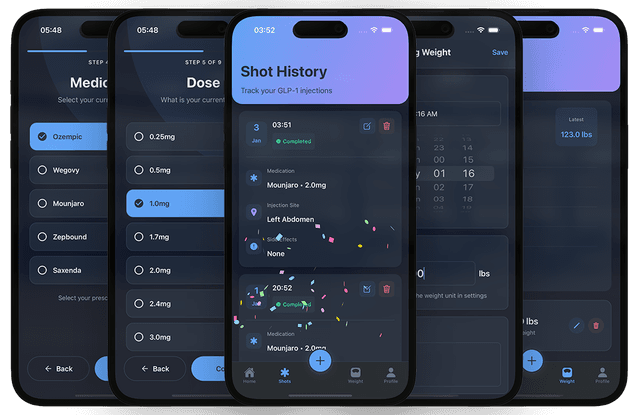
Track your injections and rotate injection sites
Side Effect Monitoring
Monitor and record any side effects
Practices to Avoid
Dosing Changes
Skip doses or change dosing schedule without consulting your doctor
Side Effects
Ignore persistent side effects
Injection Sites
Forget to rotate injection sites
Device Sharing
Share injection devices with others
Discontinuation
Stop taking medication without medical supervision
Medical Disclaimer: This guide is for informational purposes only and should not replace professional medical advice. Always consult with your healthcare provider about your specific medical condition and treatment options.